Let’s take a moment to understand what PMOS is and spread the knowledge to those who are unknowingly affected by this disorder.
Complex yet Common
Polyendocrine Metabolic Ovarian Syndrome (PMOS), formerly Polycystic Ovary Syndrome (PCOS) is a hormonal disorder that affects the ovaries and reproductive system, affecting 1 in 8 women in their reproductive years. While that number may sound high, PMOS is under-recognized and underdiagnosed.
For women with PMOS, their ovaries produce unusually high levels of hormones called androgens – a group of sex hormones that are more prevalent in the male body, affecting their menstrual cycle and may lead to other health concerns such as diabetes, high blood pressure, heart disease, and uterine cancer.
PMOS causes the body to stop ovulating correctly and develop small follicle cysts (fluid-filled sacs with immature eggs) in their ovaries. These cysts then increase the androgen levels, causing most of the PMOS symptoms and hormonal imbalance.
What Causes PMOS?
The exact cause of PMOS is unknown but there are several factors that might influence it, such as:
Family History and Genetics
Lifestyle or Environment
Abnormal levels of Insulin and Androgens
Chronic Low-Grade Inflammation
Main Symptoms of PMOS
The symptoms of PMOS can vary between women. Typically, healthcare providers diagnose PMOS if you are experiencing at least two of the following three symptoms:
Irregular Periods
Women with PMOS usually experience irregular periods, light periods, missed periods or experience unusual heavy bleeding during their menstrual cycle.
Signs of Excess Androgens
Excess hair growth or acne are common symptoms among women with PMOS
Polycystic Ovaries
Fluid-filled sacs known as follicles, containing immature eggs may develop around the edge of the ovary.
Main Symptoms of PCOS
The symptoms of PCOS can vary between women. Typically, healthcare providers diagnose PCOS if you are experiencing at least two of the following three symptoms:
Irregular Periods
Women with PCOS usually experience irregular periods, light periods, missed periods or experience unusual heavy bleeding during their menstrual cycle.
Signs of Excess Androgens
Excess hair growth or acne are common symptoms among women with PCOS
Polycystic Ovaries
Fluid-filled sacs known as follicles, containing immature eggs may develop around the edge of the ovary.
The Other Signs and Symptoms of PMOS
Weight Gain
Hair Loss
Skin Patches and Tags
Trouble Conceiving
Insulin Resistance
Mood Swings
Is There a
Cure for PMOS?
Well, truth be told, there is currently no permanent cure for PMOS. While doctors would usually prescribe androgen blockers, synthetic estrogens, birth control pills and metformin, they usually only suppress the symptoms.
A holistic approach which includes a healthy lifestyle, stress management, and targeted supplements can help women with PMOS better manage their symptoms and support their overall health.
And this is where
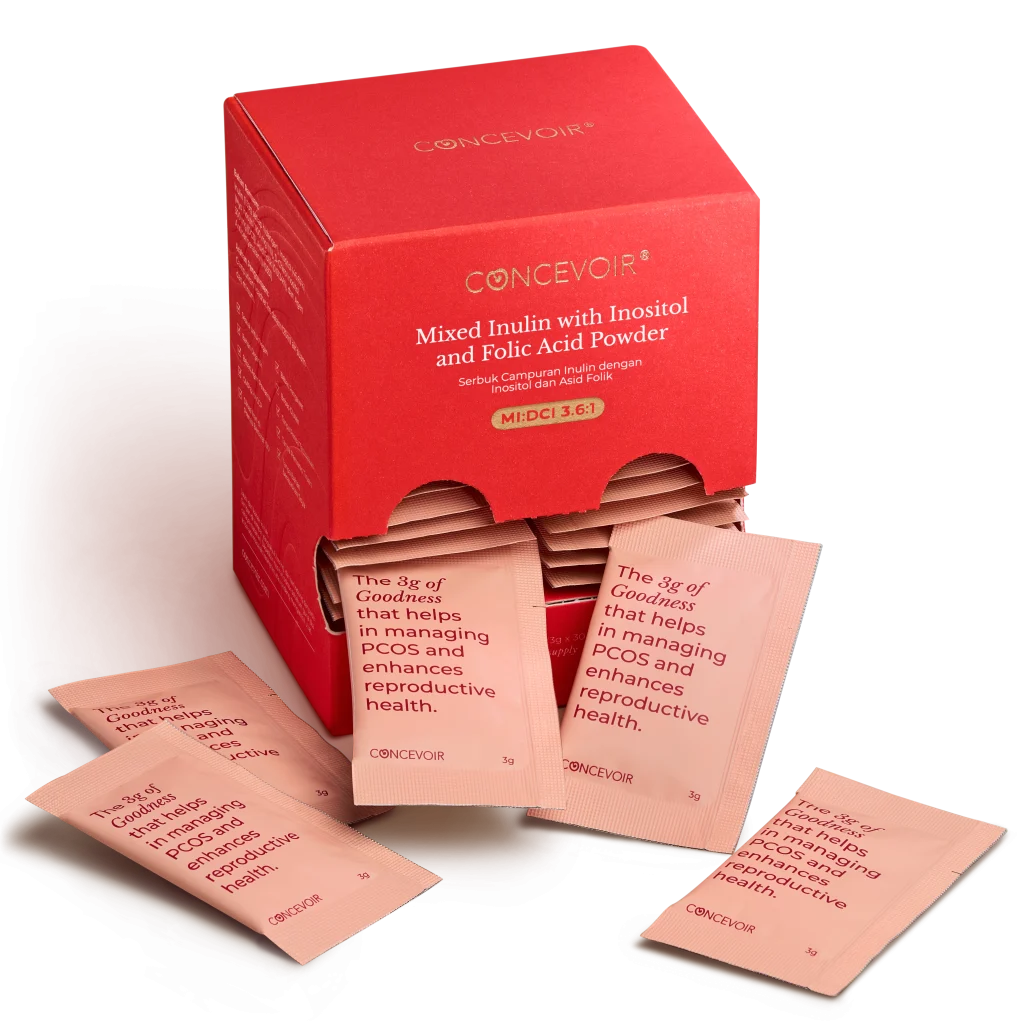
Concevoir comes in…
Here to help you manage PMOS and to reduce the severity of your symptoms naturally.
Concevoir is a Natural Dietary PMOS Solution formulated using Caronositol Fertility®, with the enhanced ratio of 3.6:1 of Myo-Inositol (MI) to D-Chiro-Inositol (DCI). 6 times higher DCI proportion used in our formula helps women with PMOS in: